Woven vs non-woven geotextile: which one for your job?
Both are synthetic fabrics laid in the ground between soil and stone, but they are made differently and do different jobs. Woven is the strong one. Non-woven is the one that lets water through and keeps soil out. This guide shows how to tell them apart and which one to buy.
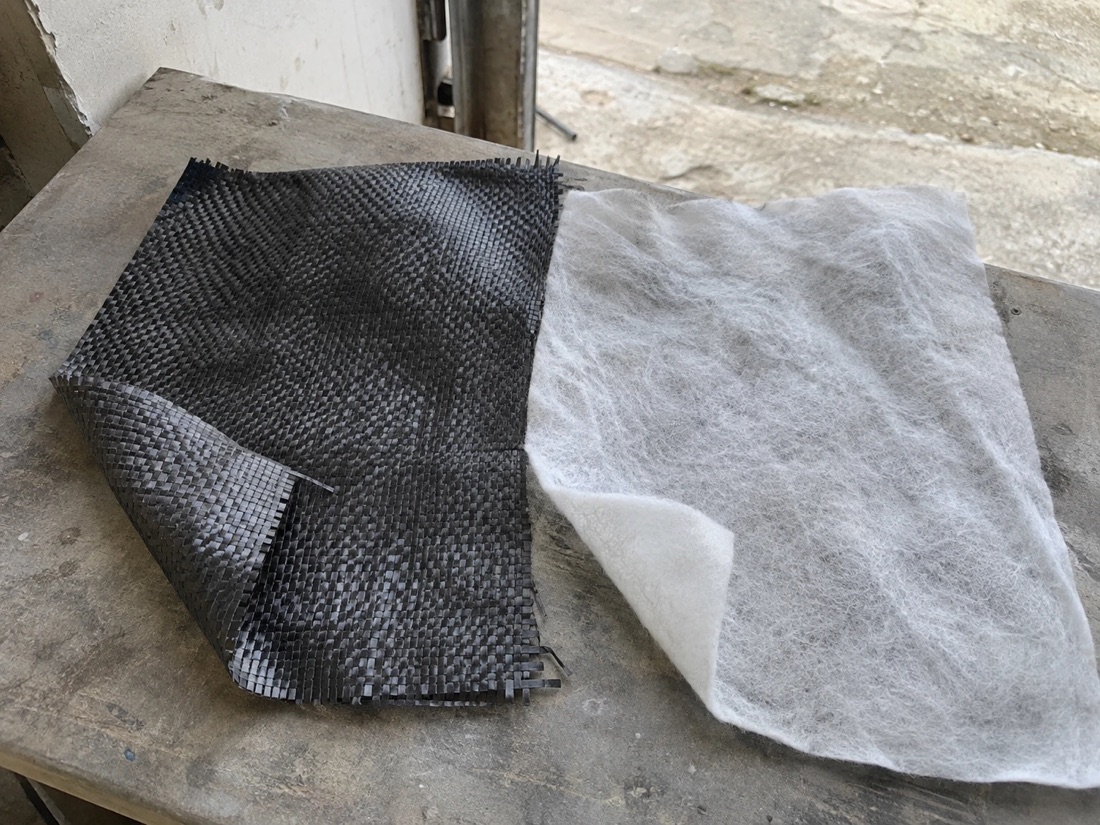
The short answer
Use non-woven geotextile for drains, filtration and most landscape work: French drains, retaining wall backfill, planter boxes, pebble gardens and driveways on firm ground. Use woven geotextile when the fabric has to carry load: roads and embankments on very soft ground, soil reinforcement and silt fences.
How each one is made.
Woven geotextile is made on a loom. Flat plastic tapes, or round yarns, cross over and under each other in a tight grid, much like a rice sack or a canvas tarp. Non-woven geotextile has no weave at all: loose fibres are laid in a web and punched with thousands of barbed needles until they lock into a thick felt.
That one difference explains everything else. The straight tapes of a woven fabric make it strong and stiff. The tangled fibres of a non-woven make it thick, soft and full of tiny paths for water.
Side by side.
A general comparison of the two types. Exact values depend on the product and grade, so check the data sheet for any job that has a specification.
| Woven | Non-woven | |
|---|---|---|
| How it's made | Tapes or yarns woven on a loom | Fibres needle-punched into a felt |
| Looks and feels like | Rice sack or tarp, thin and smooth | Thick felt or carpet underlay |
| Strength in tension | Higher, stretches little | Lower, stretches more |
| Water through the sheet | Slow, especially flat-tape types | Fast, across the whole sheet |
| Water along the sheet | Very little | Yes, the felt carries water sideways |
| Holding fine soil back | Depends on the weave openings | Good: many small, winding paths |
| Uneven ground and sharp stone | Stiff; can split along a tape | Stretches and moulds around stone |
| Cushioning liners | Little | Yes, heavy grades protect geomembranes |
| Main jobs | Stabilisation, reinforcement, silt fences | Drainage, filtration, separation, protection |
Which one for your job?
Pick by what the fabric has to do. If water has to pass through it, choose non-woven. If it has to hold soft ground together under a load, look at woven or geogrid and follow the engineer's design.
- French and subsoil drains
- Non-woven. Water in, soil out, across the whole sheet. See how to build a French drain.
- Retaining wall backfill
- Non-woven behind the wall and around the weep-hole drain, so the backfill drains without washing out.
- Pebble gardens, side yards, planter boxes
- Non-woven. Keeps stone and soil apart while rain soaks away. See pebble gardens and planter boxes.
- Under turf and artificial grass
- Non-woven, so water drains through the base.
- Driveways and yards on firm ground
- Non-woven under the crusher run, typically 210 to 250 gsm for house compounds and yards. See the driveway guide.
- Roads and hardstands on very soft clay or peat
- Woven, geogrid or both, as the engineer specifies. The fabric has to help carry the load.
- Embankments and soil reinforcement
- Woven or geogrid, to the engineer's design.
- Silt fences on site
- Woven silt-fence fabric on stakes.
- Pond liner and geomembrane protection
- Non-woven, heavy grades of 350 to 400 gsm as a cushion.
How to tell them apart on site.
Four quick checks you can do with a sample in your hand.
- LookWoven shows a criss-cross grid of tapes. Non-woven looks like felt with no pattern.
- Cut edgeWoven frays into loose strips. Non-woven holds together.
- StretchWoven barely gives. Non-woven stretches noticeably before it tears.
- WaterPour a little on top. It soaks straight through non-woven; on flat-tape woven it tends to bead and run off.
Common mix-ups.
Using the wrong type is one of the most common reasons a drain or garden fails.
- Woven fabric round a drain · water passes too slowly and silt blinds the surface
- Weed mat used as geotextile · black woven weed mat is made for garden beds, not for drains or under stone
- Non-woven relied on for strength over very soft ground · that job needs woven or geogrid to the engineer's design
- Choosing by price per roll · compare by the job and the square metres you need, not the roll
What AeroTex makes.
We make needle-punched non-woven geotextile only. ATX20 (130 gsm, the TS20-equivalent grade) is made at our plant in Bandar Sri Sendayan, Seremban, in 2 m × 100 m and 2 m × 250 m rolls, from a single roll. Heavier grades, ATX30 to ATX80 (150 to 400 gsm), are supplied to order. See all grades.
We don't make woven geotextile. If your job needs it, buy from a woven supplier and follow the engineer's specification. If you're not sure which type you need, send us a photo of the site and what you're building, and we'll tell you honestly, even if the answer is woven.
Download the AeroTex catalogue (includes the data sheet). Test reports on request.
Jobs our customers used non-woven for.
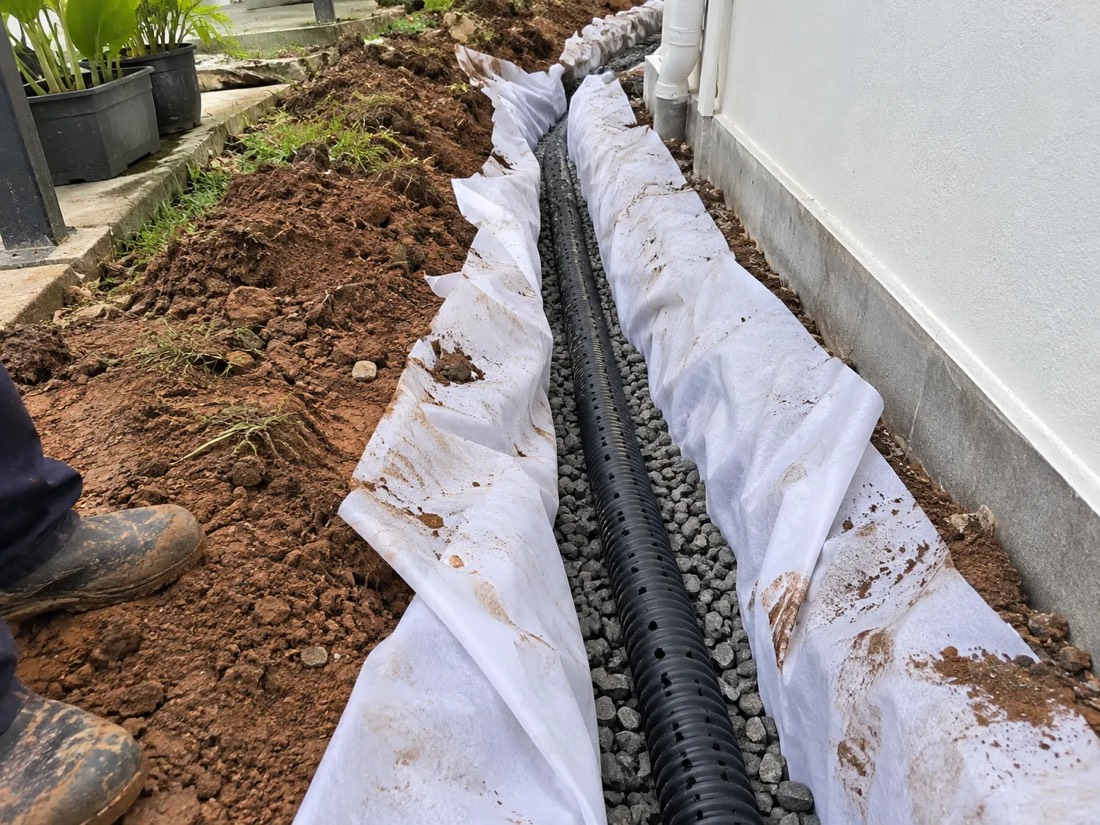
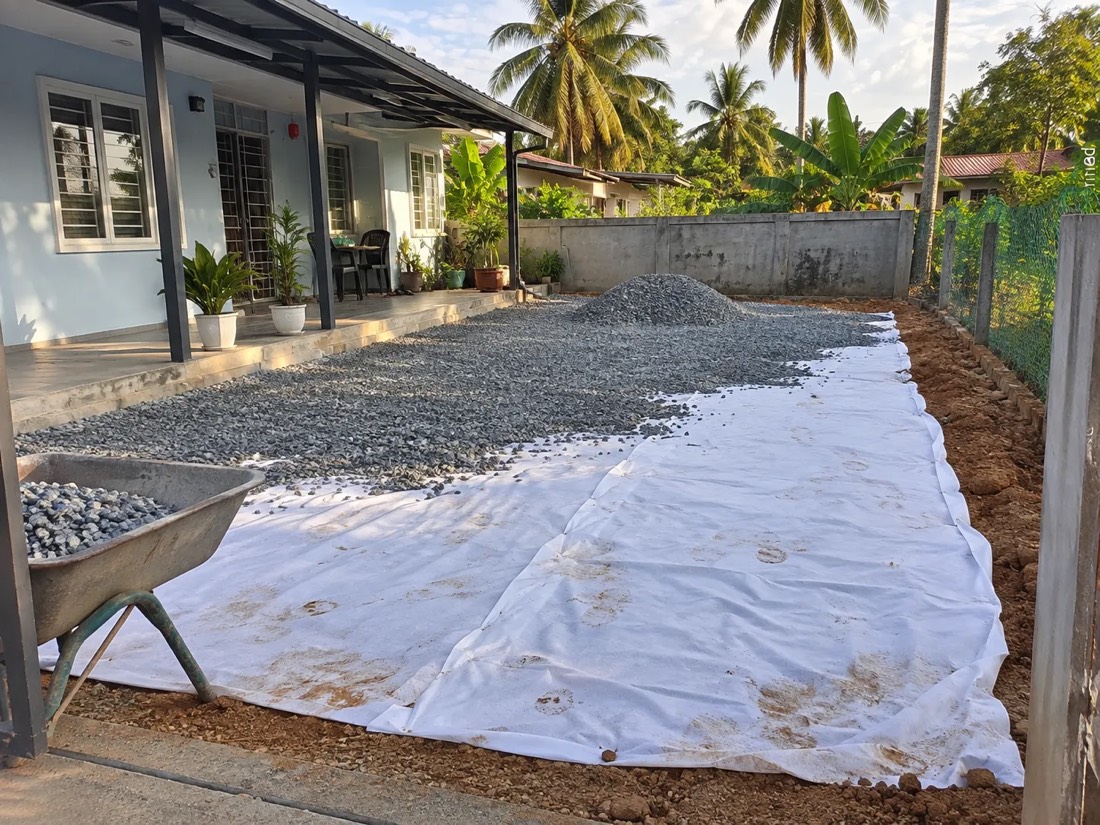
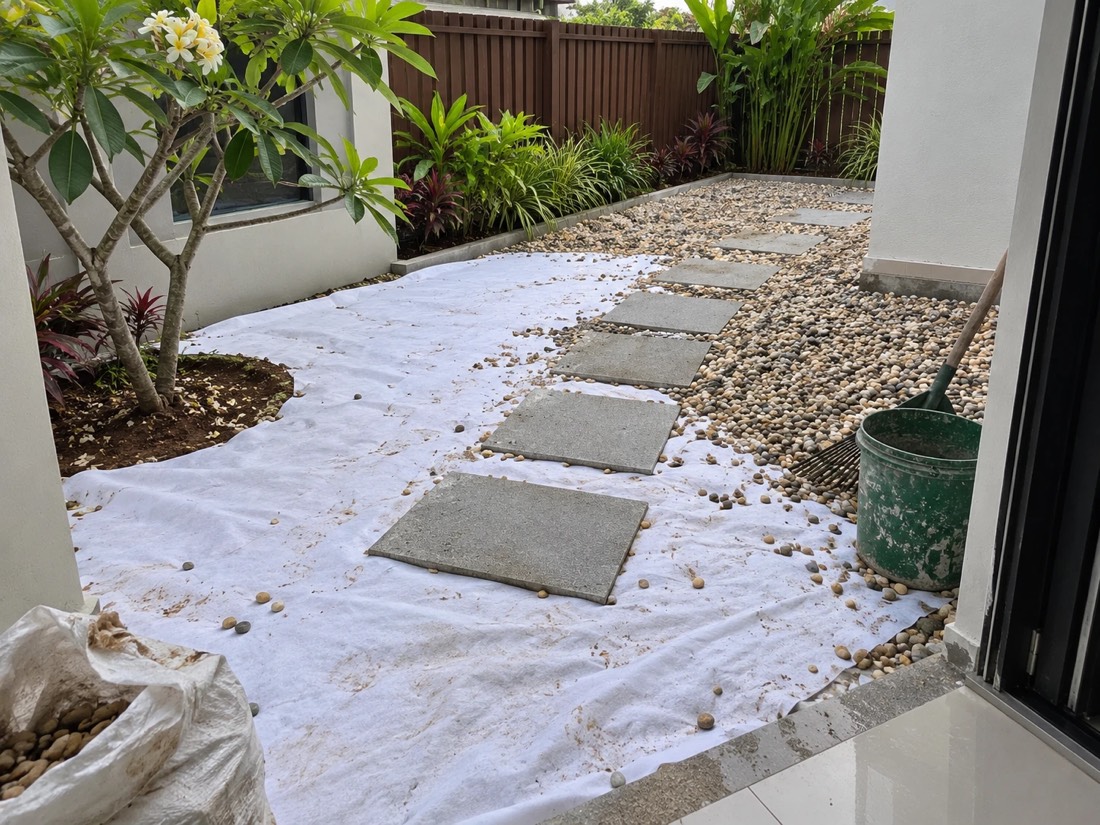
Woven and non-woven questions.
What is the difference between woven and non-woven geotextile?
Woven geotextile is made by weaving flat plastic tapes or yarns on a loom, like a rice sack. It is strong in tension and stretches little, but water passes through it slowly. Non-woven geotextile is made by needle-punching loose fibres into a felt. It is thicker, lets water through across the whole sheet and holds fine soil back, so it is the usual choice for drains, filtration and landscape work.
Which is better for a French drain or subsoil drain?
Non-woven. A drain needs water to pass through the fabric easily while fine soil stays out. A needle-punched non-woven does that across the whole sheet. Most woven fabrics, especially flat-tape ones, let water through too slowly and can blind with silt.
Which is better under a driveway or car porch?
On firm ground, a non-woven geotextile under crusher run is the common choice: it keeps the stone and soil apart and lets rainwater drain away. On very soft clay or peat, where the fabric has to help carry the load, an engineer may specify a woven geotextile, a geogrid or both.
When should I use woven geotextile?
When strength is the main job: roads, hardstands and embankments built over very soft ground, soil reinforcement, and silt fences on construction sites. Follow the engineer's drawing where there is one.
How can I tell woven and non-woven geotextile apart?
Look and feel. Woven shows a criss-cross pattern of flat tapes and frays into strips at a cut edge. Non-woven looks and feels like felt and does not fray. Pour a little water on each: it soaks straight through non-woven, but tends to bead and run off flat-tape woven.
What is woven and non-woven geotextile in Malay?
Woven geotextile is geotekstil tenunan, and non-woven geotextile is geotekstil bukan tenunan. A woven fabric in general is kain tenunan.
Is TS20 woven or non-woven?
TS20 is a needle-punched non-woven geotextile. AeroTex ATX20 is our non-woven equivalent in the same 130 gsm weight class.
Does AeroTex sell woven geotextile?
No. AeroTex makes needle-punched non-woven geotextile only, from ATX20 (130 gsm) to ATX80 (400 gsm). If your job needs woven geotextile, use a woven supplier and follow the engineer's specification. If you're not sure which you need, send us the job on WhatsApp and we'll tell you honestly.
Not sure which one you need?
Send us what you're building, a photo of the ground and the delivery location. We'll tell you whether non-woven fits, which grade, and today's price.
 © 2026 AeroTex™ Non-woven Geotextile. Made in Malaysia.
aerotex.my